

Part1: What is Puerarin extract puerarin?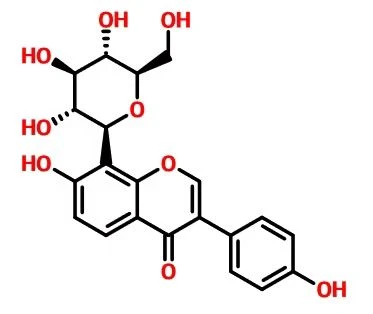
Puerarin extract puerarin is an isoflavone compound extracted and isolated from the leguminous plant Pueraria lobata. Studies have found that it has various functional activities such as anti-inflammatory, antioxidant, anti-osteoporosis, hypoglycemic, and anti-cancer.
Part2:The effects of Puerarin extract puerarin
1.The effect of puerarin on cardiovascular disease
Atherosclerosis (AS) is a common disease that seriously endangers human health, and is the basis of most ischemic cardiovascular and cerebrovascular diseases. As a representative inflammatory cytokine, CRP can promote the occurrence and development of AS through various biological activities. Studies have shown that puerarin can inhibit the inflammatory response in rabbit atherosclerosis by blocking the nuclear factor-kappa B (NF-κB) signaling pathway , and also by blocking the NF-κB signaling pathway. To inhibit the expression of CRP, it is expected to become an effective drug against AS .
2.The effect of puerarin on osteoporosis
TNF-α is secreted by activated T lymphocytes, it can inhibit the formation of osteoblasts, promote the differentiation of osteoclasts, and play an important role in the occurrence of osteoporosis . The effect of puerarin on TNF-α found that, as an anti-inflammatory factor, puerarin can significantly reduce the level of TNF-α in the serum of ovariectomized rats, and has a certain therapeutic effect on osteoporosis.
3.The effect of puerarin on diabetes
Puerarin has been used in the study of diabetes and its complications since the 1990s, and has achieved certain results so far. Puerarin can affect the secretion of inflammatory factors in the diabetic body, reduce the inflammatory response, and improve the clinical symptoms of diabetes. Experimental studies have found that , puerarin can reduce the level of serum MCP-1 in diabetic rats, reduce the expression of MCP-1 in the renal cortex, and reduce the degree of renal lesions. Experiments have confirmed [20] that insulin resistance can significantly increase the level of the inflammatory factor TNF-α in the body, while significantly reducing the anti-inflammatory factor, causing the body to be in a state of chronic inflammation. Using puerarin to interfere with diet-induced insulin resistance in obese rats, it was found that puerarin can reduce blood sugar and lipids, and also significantly reduce the level of inflammatory factor TNF-α . Some studies have also found that, puerarin can reduce the levels of ICAM-1 and TNF-α at the same time, and reduce kidney damage in diabetic rats.
4. Effects of puerarin on cancer
As early as the 1990s, the natural plant pueraria has been used to study the effect of malignant tumors. In recent years, puerarin, as the main active component of puerarin, has been extensively studied for its anticancer effect and its mechanism. Studies have shown that , puerarin can inhibit the canceration of many different organs or tissues, such as blood, lung, liver and breast. Puerarin can inhibit cancer cells by regulating inflammation-related proteins and signaling pathways, and its anti-inflammatory effect is also one of the reasons why puerarin exerts its anti-cancer effect.
Part3: Conclusion
The anti-inflammatory effect of puerarin on the above-mentioned inflammation-related diseases is mainly from the following aspects: ①Reduce the production of inflammatory cytokines such as IL-1, IL-6, CRP, TNF-α; ②Reduce the production of MMP-2, MMP-9, etc. The expression of inflammatory mediators; ③ reduce the production of ICAM-1 cell adhesion molecules; ④ inhibit the effect of inflammatory chemokines, such as MCP-1, TGF-β.