

Tannins constitute a class of natural polyphenolic compounds widely distributed throughout the plant kingdom. They hold significant value in plant defense mechanisms, the formation of fruit palatability, and various industrial sectors-including chemicals, pharmaceuticals, food, and leather manufacturing. While the terms "tannins" and "tannic acid" are often used interchangeably as if they represent the same concept, in reality, there are distinct differences between the two regarding their chemical definitions, structural characteristics, and practical applications. The following discussion will delve into the chemical nature of both tannins and tannic acid to systematically outline their differences and interrelationships.
KINTAIBIO® has dedicated years of expertise to the plant extract industry. Our tannic acid powder is produced through highly efficient esterification reactions and rigorous separation and purification processes; its core competitive advantage lies in the dual assurance provided by its natural origin and precise structural integrity. We invite you to contact us at sales@kintaibio.com for further information regarding our tannic acid powder products.
What Are Tannins?
Tannins possess the ability to bind with proteins and induce their precipitation when dissolved in an aqueous solution. Due to this specific characteristic, consuming unripe fruits-which typically contain high levels of tannins-results in a dry, astringent, and puckering sensation in the mouth. This occurs because the tannins bind with the proteins present in saliva; as the lubricating properties of these proteins are diminished, the epithelial tissues of the tongue and oral cavity contract, creating a distinct sensation of dryness and astringency. From a chemical structural perspective, tannins are not a single, monolithic compound but rather a diverse mixture of structures, primarily composed of polyphenol derivatives with molecular weights typically ranging from 500 to 3,000.

Based on differences in their chemical structures, tannins are broadly classified into two main categories:
- Hydrolyzable Tannins: These are formed when phenolic acids-such as gallic acid or ellagic acid-are linked to a glucose core via ester bonds. Under the influence of acids, bases, or enzymes, these tannins can undergo hydrolysis, breaking down into simpler, smaller-molecule phenolic acid compounds. Depending on the specific products yielded by this hydrolysis, hydrolyzable tannins are further subdivided into gallotannins and ellagitannins. A quintessential example of this category is gallotannic acid (tannic acid derived from gallnuts). Many traditional medicinal plants contain predominantly hydrolyzable tannins; examples include gallnuts (used for hemostasis and anti-inflammation), Gardenia leaves (used to protect the gastrointestinal mucosa), and peony root bark (used in the treatment of cardiovascular diseases).
- Condensed Tannins: Formed through the polymerization of flavan-3-ol monomers via carbon-carbon bonds, these tannins are non-hydrolyzable and are commonly found in foods such as tea, grape seeds, and persimmons. The tannins present in green tea are, in fact, tannin precursors-specifically catechins and their derivatives; during the fermentation process used to produce black tea, these compounds undergo microbially catalyzed oxidative condensation to form substances such as theaflavins and thearubigins, thereby acquiring the characteristic properties of condensed tannins.

Notably, depending on their specific molecular structure, tannins exhibit distinct differences in their applications within the food and animal feed industries. Condensed tannins are frequently utilized as feed additives for ruminant livestock to enhance rumen energy metabolism and improve feed utilization efficiency, whereas hydrolyzable tannins are predominantly employed as natural animal growth promoters, finding widespread application in the rearing of swine and poultry.
What is Tannic Acid?
Tannic acid represents a specific substance within the broader category of tannins. In terms of chemical composition, tannic acid belongs to the gallotannin subclass of hydrolyzable tannins; it is a compound structured around a core backbone of glucose (or quinic acid), to which multiple gallic acid units are linked via ester bonds. More precisely, commercial tannic acid is actually a mixture of decagalloylglucose derivatives, wherein the number of galloyl groups varies between 2 and 12, depending on the source of extraction.

Industrially, Chinese gallnuts constitute the most significant natural source of tannic acid. Chinese gallnuts are insect galls formed when gall aphids parasitize trees such as the Chinese sumac (Rhus chinensis); they are a traditional Chinese medicinal material unique to my country. Gallnuts possess a remarkably high tannic acid content-reaching up to 70% or more-making them one of the primary raw materials for the industrial production of tannic acid. Tannic acid has an extremely wide range of applications; following processing, it is utilized across numerous fields, including petroleum, drilling, metallurgy, machinery, aviation, chemical manufacturing, light industry, dyes, leather tanning, pharmaceuticals, national defense, food processing, electronics, brewing, and photography.

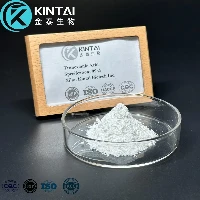
Regarding its physicochemical properties, tannic acid powder presents as a pale yellow to light brown powder with an intensely astringent taste. It is soluble in polar solvents such as water, ethanol, and glycerol, yet almost insoluble in non-polar solvents like benzene and petroleum ether; furthermore, it is highly hygroscopic when exposed to air and gradually darkens over time. Due to the presence of numerous phenolic hydroxyl groups within its molecular structure, tannic acid exhibits weak acidity (pKa ≈ 6) and possesses the ability to bind with proteins to form insoluble tannate-protein precipitates-a characteristic known as "astringency."
The Distinction Between Tannins and Tannic Acid
Categorical Relationship:
"Tannin" is a collective term for a broad class of substances, encompassing two major categories: hydrolyzable tannins and condensed tannins. "Tannic acid," conversely, is a specific member within this class with a relatively well-defined structure. While all tannic acids are tannins, not all tannins are tannic acids.
Precision of Chemical Definition:
Scientifically, tannic acid possesses a precise chemical formula and reproducible physicochemical parameters (C₇₆H₅₂O₄₆; molecular weight: approx. 1700; melting point: 210–218°C), making it a compound capable of quantitative characterization. In contrast, "tannin" serves as a generic umbrella term covering a vast array of polyphenolic substances with varying chemical compositions and molecular weights; their structures are highly diverse and cannot be adequately summarized by a single chemical formula or two.
Differences in Source:
Tannins are widely distributed throughout various plant tissues-different types of tannins can be found in grape seeds and skins, tea leaves, and oak bark, among other sources. Tannic acid, however-being a structurally distinct form of hydrolyzable tannin-is primarily concentrated in a select few plant species, such as gallnuts.
Colorimetric Reactions:
Under laboratory conditions, the distinct color reactions exhibited by these substances can serve as a supplementary means of differentiation: tannic acid produces a distinct blue-black coloration when exposed to a ferric chloride solution, whereas condensed tannins and other polyphenolic substances typically yield green or brownish-yellow hues. Furthermore, the astringency associated with tannic acid is far more acute and persistent than that of general tannins, providing an additional basis for sensory-based identification.
Advantages of Tannic Acid as a Product Ingredient (Compared to General Tannins)
Defined Composition and Controllable Quality:
Tannic acid powder possesses a precise chemical formula and specific physicochemical parameters, allowing for standardized quality control in industrial production through assays for content, loss on drying, and heavy metal levels. Industrial-grade tannic acid typically requires a minimum content of ≥81%, while refined products can exceed 90%, thereby meeting the stringent quality control requirements of the fine chemical and pharmaceutical sectors. In contrast, the broader concept of "tannins" encompasses too wide a range of substances to be utilized directly as a standardized raw material.
Characteristic Color Reaction with Iron Ions:
When an aqueous solution of tannic acid encounters iron salts, it rapidly develops a blue-black coloration. This distinctive characteristic is widely utilized in the manufacture of blue-black inks, as well as in processes such as iron-mordant dyeing during leather tanning. Iron gall ink-a writing medium primarily composed of ferrous sulfate, tannic acid, and gallic acid-undergoes oxidation after application to form water-insoluble, high-valence black iron salts. As the color transitions from blue to black, the resulting ink exhibits excellent resistance to both water and light. This type of ink has been employed in Europe for quill pen writing since the 4th century, and it remained the dominant writing medium from the 5th through the 19th centuries.

Stable Tanning Performance:
Tannic acid powder contains a high density of phenolic hydroxyl groups, which enable it to undergo cross-linking reactions with the imino groups of collagen proteins found in leather. By displacing the hydrogen bonds between the proteins and water molecules, tannic acid causes the soluble proteins within the raw hide to coagulate; following the tanning process, the material is transformed into flexible, durable leather. The primary mechanism of tannic acid's action involves complexation with the collagen in the raw hide, leading to protein denaturation and cross-linking, thereby achieving structural stabilization.
Broad Spectrum of Applications:
In the food industry, tannic acid powder is utilized for the clarification of wines and beverages, as well as for its antioxidant and color-stabilizing properties. Recent research has also indicated that supplementing broiler chicken feed with tannic acid can reduce the moisture content of droppings-demonstrating an astringent effect-and may also, to a certain extent, promote hepatic lipid metabolism. In the daily chemical sector, it serves as an astringent ingredient in sunscreen formulations; in water treatment applications, it is employed for boiler descaling, drilling fluid conditioning, and metal corrosion prevention.
Frequently Asked Questions (Focus on Distinctions)
How does food-grade tannic acid differ from industrial-grade tannic acid?
The primary differences between the two lie in purity, impurity control, and regulatory standards. Food-grade tannic acid must comply with relevant standards, adhering to strict limits regarding indicators such as heavy metals and residual solvents; its maximum allowable usage levels and application scenarios are governed by food safety regulations. Industrial-grade tannic acid, conversely, adheres to industry-specific standards for industrial applications-such as leather tanning, ink manufacturing, boiler descaling, and water treatment-and is not required to meet food-grade safety limits. Furthermore, pharmaceutical-grade tannic acid complies with pharmacopoeia standards and is utilized in the production of medicinal preparations.

Why is tannic acid considered the standard reference for tannins?
- Relatively well-defined structure: In the realms of chemical analysis and research and development, tannic acid stands as one of the few representative polyphenolic compounds possessing a precisely characterized molecular structure. Although the broader category of tannins encompasses a vast array of substances with complex compositions, tannic acid-which is extracted from gallnuts-exhibits distinct structural characteristics. Through extensive practical application, it has been firmly established as the commonly accepted reference standard for quantifying the content of tannin-related substances.
- Ease of isolation and quantification: China leads the world in the production of gallnuts, the raw material for tannic acid, and the extraction process has been fully industrialized. The tannic acid content in these extracts typically ranges from 63% to over 67%, facilitating large-scale industrial production and the subsequent purification of high-purity reference standards.
Established status through diverse practical applications: From serving as the raw material benchmark in leather tanning and a core ingredient in ink formulations, to acting as the standard reference for the ferric chloride colorimetric reaction in various product inspections, tannic acid powder has-through these engineering and analytical practices-gradually solidified its status as the definitive "representative substance of tannins."
Where to Buy Tannic Acid Powder?
When discussing "tannins," we are referring to a broad functional category; however, when selecting "tannic acid" as a raw material, we are choosing a product with a clearly defined composition, controllable quality, and established standards across various industrial applications. For instance, the tannic acid powder produced by KINTAIBIO® plays a pivotal role in the pharmaceutical, food, daily chemical, and agricultural sectors, thanks to its remarkable antioxidant, antimicrobial, and protein-precipitating capabilities. The product range encompasses various purity specifications-including 50%, 80%, 96%, and 98% tannic acid-thereby meeting the specific requirements for active ingredient content across diverse industries.

Production employs a combined process of low-temperature extraction, membrane separation, and spray drying to maximize the preservation of tannic acid's natural molecular structure and biological activity; furthermore, every batch undergoes rigorous chemical identification testing to ensure the product's authenticity and reliability. Please feel free to contact us at Sales@Kintaibio.Com.