

Pueraria is a traditional medicinal and edible plant with a history of thousands of years in Asia. In recent years, it has re-entered the spotlight of the modern health industry in the form of Pueraria extract. From the traditional Chinese medicine records of relieving muscle tension and reducing fever, promoting fluid production and quenching thirst, to the bone protection, liver nourishment, and skin protection revealed by modern pharmacological research, the scientific connotations of Pueraria extract are being gradually unraveled.
As a professional plant extract manufacturer, KINTAIBIO® has for many years focused on the research, development, and production of functional natural plant ingredients. We use high-quality Pueraria raw materials and offer high-quality Pueraria extract powder in a variety of standardized specifications. For more information, please feel free to contact us at sales@kintaibio.com.
The Core Active Ingredients of Pueraria Extract
Pueraria is the dried root of the leguminous plant Pueraria lobata (Wild.) Ohwi or Pueraria thomsonii Benth. The biological activity of its extract is mainly attributed to its rich isoflavonoids. Modern pharmacological studies have shown that 53 isoflavonoids have been isolated and identified from Pueraria so far, among which puerarin is the most abundant and most extensively studied component. In addition to puerarin, daidzin, daidzein, and others are also important active ingredients.
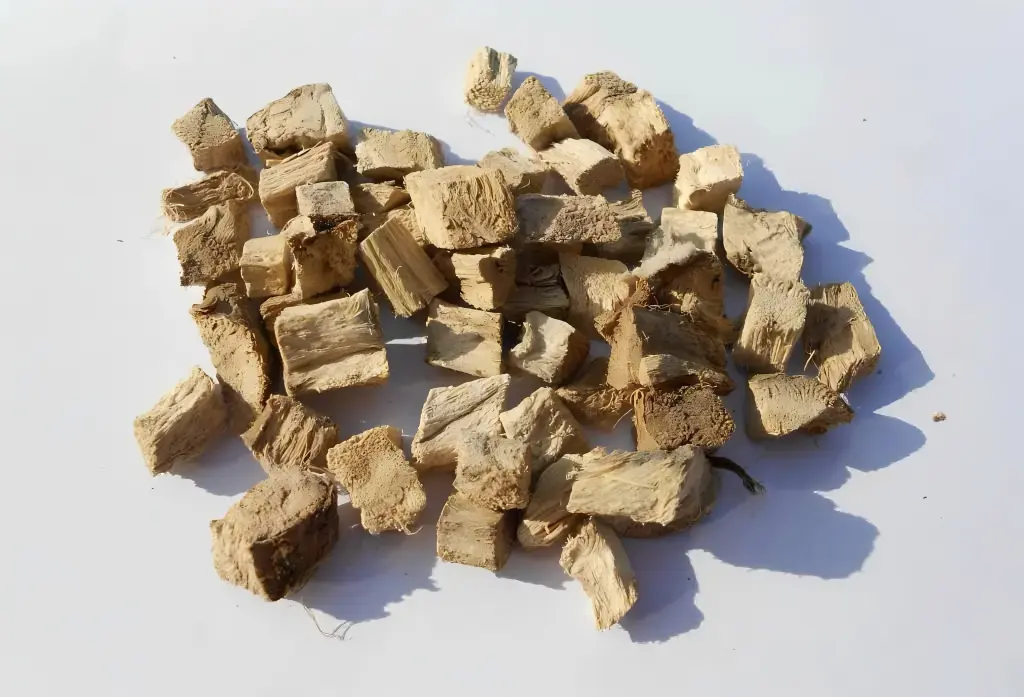
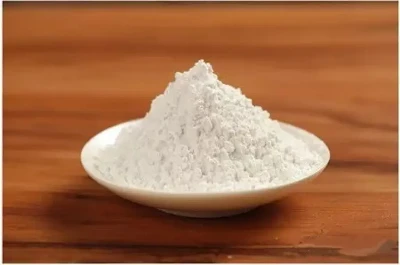
Pueraria extract benefits
Bone Health Benefits of Pueraria Extract
Pueraria extract has solid scientific support in terms of bone health. Multiple studies have shown that puerarin has a 'dual-regulatory' effect on bone: on the one hand, it helps 'build bone', and on the other hand, it inhibits 'bone breakdown'.
In terms of promoting bone formation, puerarin can stimulate the proliferation and differentiation of osteoblasts and promote collagen synthesis and mineral deposition, thereby increasing bone density. Studies have shown that puerarin can activate multiple signaling pathways within osteoblasts, including promoting the expression of bone morphogenetic protein-2 (BMP-2) and the synthesis of nitric oxide. These molecular signals can further regulate genes related to bone formation, ultimately driving new bone generation.
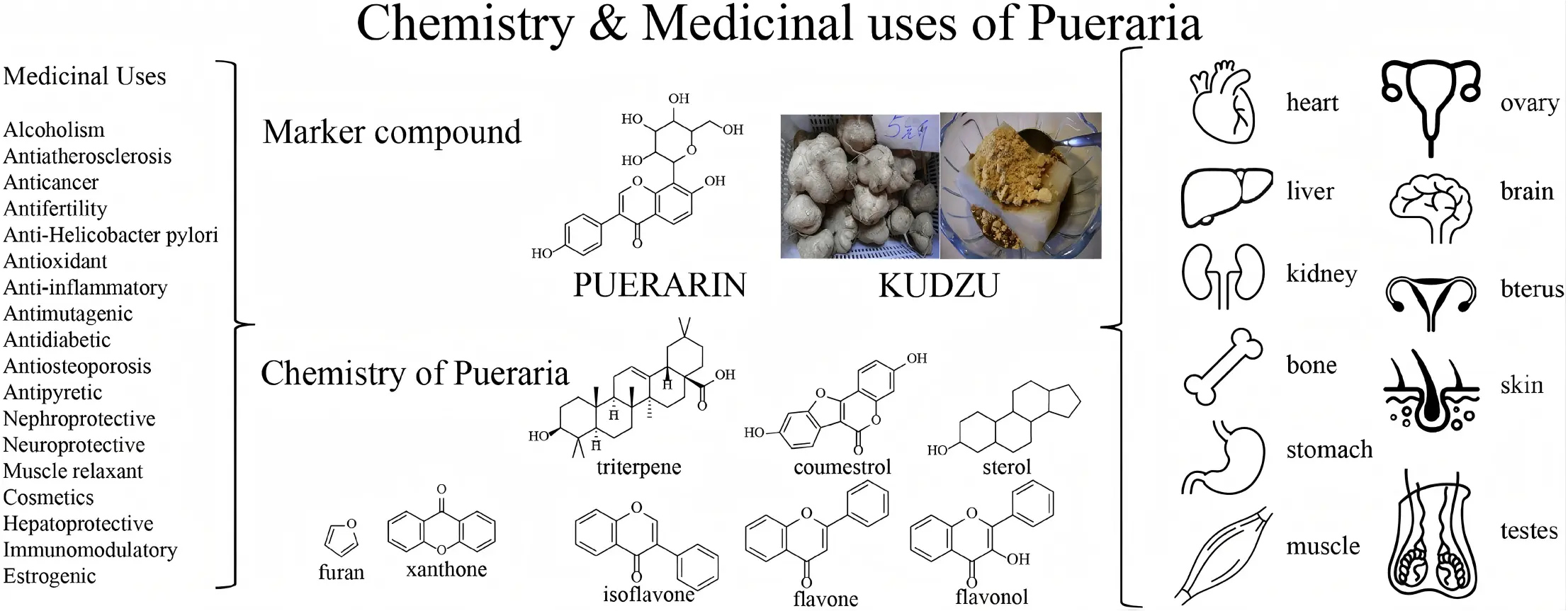
In terms of inhibiting bone loss, it can effectively prevent the overactivity of osteoclasts and reduce excessive bone resorption. Puerarin can inhibit the differentiation and bone resorption function of osteoclasts, and its mechanism of action involves blocking specific signaling pathways, thereby reducing bone destruction. More notably, unlike traditional estrogen replacement therapy, puerarin has not caused side effects such as uterine hyperplasia in animal experiments, making it a more attractive candidate ingredient for bone health supplements in menopausal women. A study on ovariectomized mice found that puerarin can effectively prevent bone loss without significantly affecting uterine weight, demonstrating good safety.
Liver Benefits of Pueraria Extract
Multiple studies have shown that puerarin, the core active ingredient in Pueraria, has multiple protective effects on the liver. On the one hand, it can help the liver resist oxidative damage by activating the liver's own antioxidant defense system, reducing the attack of harmful free radicals on liver cells. Studies have found that puerarin can increase the activity of antioxidant enzymes such as superoxide dismutase (SOD) and glutathione peroxidase (GPx) in the liver, while reducing the level of the lipid peroxidation product MDA, thereby alleviating oxidative stress-induced damage to liver cells at the source.
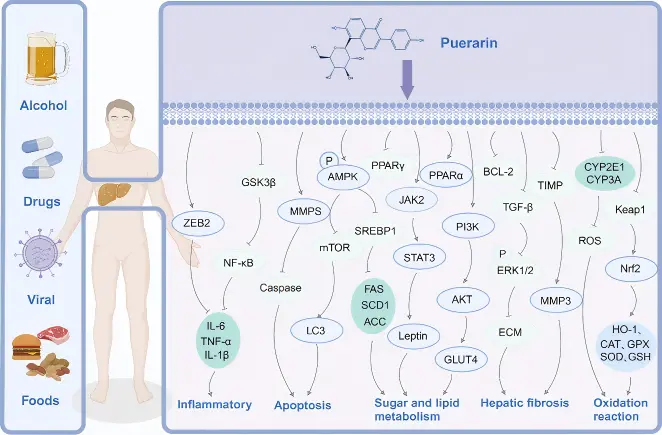
On the other hand, puerarin can also regulate hepatic lipid metabolism and reduce fat accumulation in liver cells, showing potential for improving the common problem of fatty liver in modern populations. In alcoholic liver injury models, puerarin can reduce hepatic triglyceride and cholesterol levels and improve steatosis, and its mechanism involves regulating the expression of genes related to fatty acid oxidation and lipid synthesis.
In addition, against liver injury caused by alcohol, environmental toxins, and other factors, Pueraria extract has also demonstrated protective effects by reducing inflammation and inhibiting abnormal liver cell death. Studies have shown that puerarin can reduce the release of inflammatory factors such as TNF-α and IL-6 in the liver, while blocking abnormal apoptosis of liver cells by regulating the Bax/Bcl-2 balance and inhibiting caspase-3 activation. These findings provide a scientific basis for the application of Pueraria extract in liver-protective dietary supplements.
pueraria lobata root extract skin benefits
Pueraria lobata root extract skin benefits have been verified in many scientific studies. Simply put, it acts like an 'invisible protective shield' that helps the skin resist UV damage. UVA and UVB in sunlight are the main culprits behind skin aging and wrinkles, and the active ingredients in Pueraria can scavenge harmful free radicals generated after UV exposure, reduce collagen loss, and simultaneously promote new collagen production. Collagen is the 'scaffold' that supports skin elasticity-the less that is lost and the more that is generated, the firmer the skin and the fewer the wrinkles. In addition, Pueraria extract can also alleviate UV-induced skin inflammation and help the skin stay hydrated, making it a natural ingredient well worth attention for daily sun protection and anti-aging care.
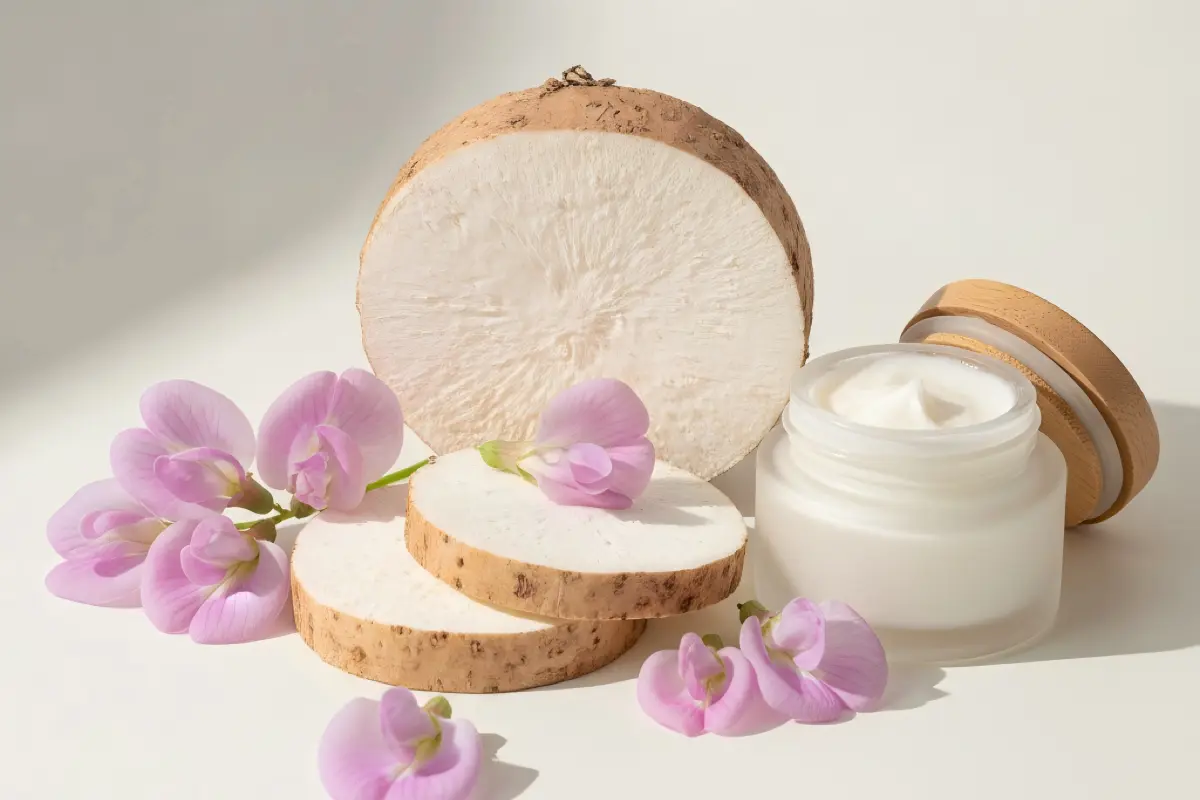
In addition to anti-photoaging effects, Pueraria extract also performs excellently in repairing the skin barrier and soothing sensitivity. The skin barrier is like a 'city wall'-once damaged, the skin becomes prone to dryness, redness, and allergies. Studies have found that Pueraria extract can help repair this barrier and enhance the skin's ability to retain moisture and resist external irritants. In experiments on atopic dermatitis (a common skin inflammation), Pueraria extract significantly reduced symptoms such as skin redness, swelling, dryness, and itching, while also lowering allergy-related indicators in the body.
In addition, Pueraria's effect on melanin is rather special-extracts from different parts have different effects; some can help reduce melanin production, while others can promote melanin synthesis, providing flexible options for different skincare needs. Overall, Pueraria extract is a versatile plant ingredient that combines anti-aging, repairing, and soothing benefits.
Pueraria Extract Uses
Pueraria extract has become an important category in the Western dietary supplement market. In recent years, as consumers' preference for natural plant-derived ingredients has continued to grow, its market demand has kept rising. In the United States, Pueraria extract containing puerarin is widely sold as a dietary supplement, mainly positioned for metabolic health support and relief of menopausal symptoms, and is especially popular among people concerned with blood sugar management, weight control, and women's health. In China, as Pueraria is a substance that is both medicine and food, its extract is widely used in various functional foods, such as products for hangover relief and liver protection, solid beverages for improving menopausal discomfort, and health foods for assisting in lowering blood sugar and blood lipids. Product forms include tablets, capsules, granules, oral liquids, and other dosage forms, meeting the needs of different consumption scenarios.
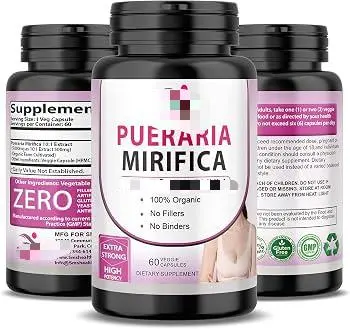
The antioxidant and phytoestrogenic activities of Pueraria isoflavones have made them a focus of attention in the cosmetics field. Some skincare products use Pueraria extract as a functional ingredient for anti-aging, whitening, and moisturizing, leveraging its properties of scavenging free radicals and inhibiting tyrosinase activity, and it has shown good potential in fading dark spots, improving fine lines, and enhancing skin elasticity. In addition, it is also used in essences, masks, lotions, and sunscreen products, working synergistically with other plant active ingredients. As the 'ingredient-conscious' consumer group's attention to plant-derived actives continues to heat up, research on the application of Pueraria isoflavones in niche areas such as anti-photoaging, barrier repair, and scalp care is also deepening.
Where to Buy Pueraria Extract
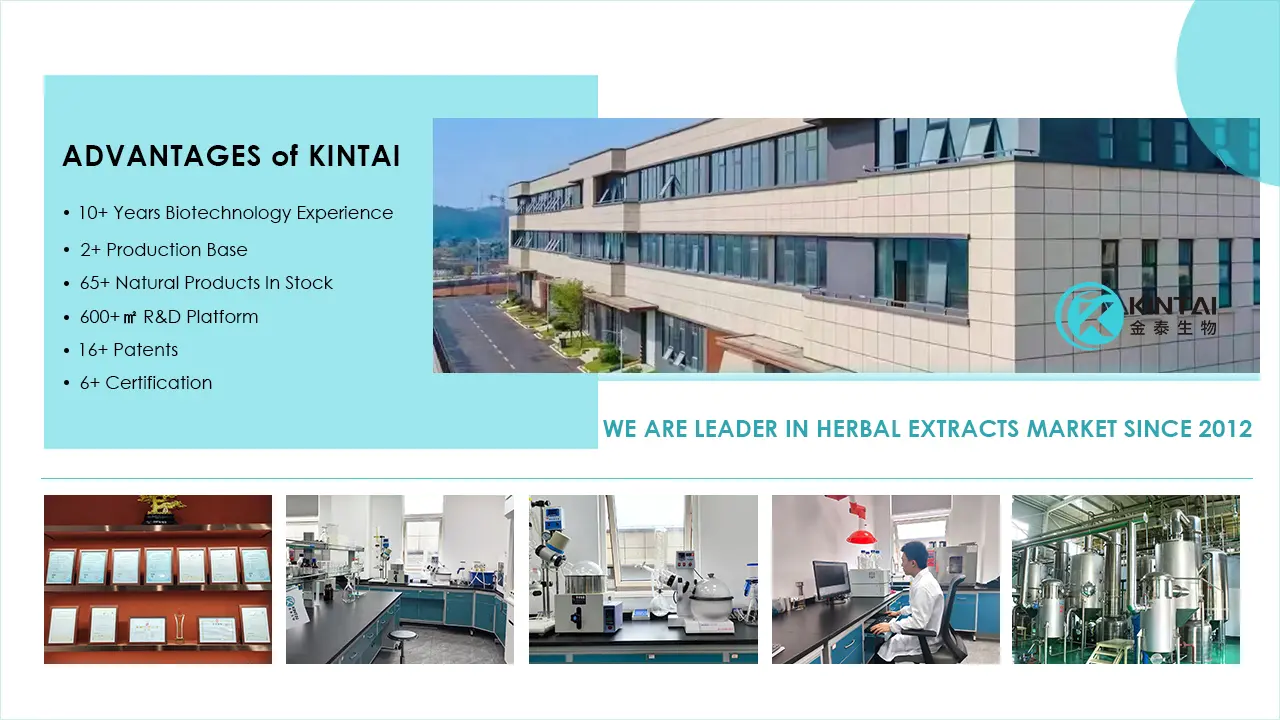
KINTAIBIO® is a professional manufacturer specializing in the production of plant extracts, supplying high-quality Pueraria extract powder to the global market. Our products come in a full range of specifications and can meet the diverse needs of different customers. Whether it is a small-batch sample or long-term, stable bulk procurement, we can develop flexible supply solutions based on actual requirements.
| KINTAIBIO Flow Chart Of Pueraria Extract | |||
| Product Name | Source | Specifications | Test Method |
| Pueraria Extract | Dried root of Pueraria Lobata | 15% Puararin | HPLC/UV |
| 20% Puararin | |||
| 30% Puararin | |||
| 40% Puararin | |||
| 60% Puararin | |||
| 80% Puararin | |||
| 98% Puararin | |||
| Puerarin Flavonoids 40% | |||
| 10:1 | TLC | ||
| 20:1 | |||
| 30:1 | |||
| 50:1 | |||
| 100:1 | |||
We are committed to providing global customers with traceable, quality-testable Pueraria raw materials and tailor-made supply solutions. At the same time, we can provide complete COA and MSDS reports as well as batch quality documentation to ensure product compliance and reliability. For different specifications, order volumes, and delivery requirements, our team will provide competitive quotations. If you would like to purchase Pueraria extract powder with stable quality, please feel free to contact us by sending an email to sales@kintaibio.com.
FAQ
Q: What is Pueraria?
A: Pueraria is the dried root of the legume plants Pueraria lobata or Pueraria thomsonii, and has been used as both food and medicine in Asia for thousands of years. Its core active components are isoflavones, among which puerarin is the most abundant and most extensively studied. Modern research shows that the natural active compounds in Pueraria can protect the liver, bones, and skin by regulating oxidative stress, inflammatory responses, and lipid metabolism. Common dietary forms of Pueraria include Pueraria powder and Pueraria tea, and it is widely used in the food and dietary supplement industries. As a traditional Chinese herbal medicine, Pueraria is believed in TCM theory to relieve muscle tension and fever, promote body fluid production and quench thirst, and raise yang energy to stop diarrhea.
Q: What are the side effects of Pueraria?
A: Pueraria is generally well tolerated at normal doses and with short-term use, with no obvious adverse reactions. However, excessive or long-term use may cause digestive discomfort such as stomach coldness, bloating, nausea, and loss of appetite, because Pueraria is cooling in nature and can weaken the spleen and stomach. A small number of sensitive individuals may experience allergic reactions to compounds such as puerarin, ranging from skin flushing, itching, and rashes to lip swelling or even difficulty breathing in severe cases. It is particularly important to note that Pueraria has blood pressure- and blood sugar-lowering effects, so people with low blood pressure or low blood sugar, as well as those taking antihypertensive or antidiabetic medications, should use it under medical supervision.
Q: Pueraria benefits for female?
A: The benefits of Pueraria for women are mainly reflected in menopausal health support and daily skincare. In terms of menopausal health, studies show that Pueraria extract can gently regulate hormonal balance, helping to relieve discomfort such as hot flashes and night sweats, while also showing protective potential for bone and metabolic health in postmenopausal women. In skincare, the antioxidant and phytoestrogenic activity of Pueraria isoflavones has made them a focus in the cosmetics industry. Some skincare products use Pueraria extract in anti-aging, whitening, and moisturizing formulas to help fade dark spots, reduce fine lines, and improve skin elasticity. In addition, Pueraria extract can repair the skin barrier and soothe sensitivity, and is used in serums, masks, lotions, and sunscreen products.