



Xi'an Kintai Biotech Inc is one of the most experienced manufacturers and suppliers of Capsaicin powder in China. Please feel free to wholesale high quality Capsaicin powder for sale here from our factory. For price consultation, contact us.
Capsaicin powder Manufacturer/supplier
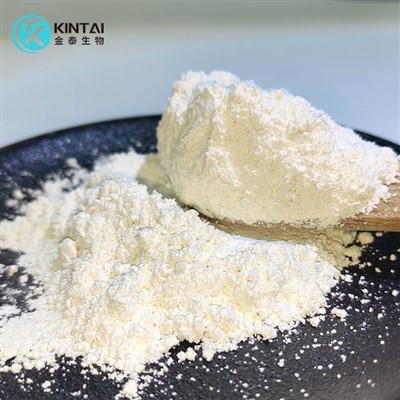
As a specialized manufacturer dedicated to the R&D and production of capsaicin powder, KINTAIBIO® leverages its profound scientific understanding of capsaicin-a key active ingredient-to provide you with high-quality, high-purity products. Capsaicin is a hydrophobic alkaloid that ranges in consistency from crystalline to waxy; our product presents as a uniform, fine powder ranging in color from white to pale yellow. Exhibiting excellent solubility, it integrates rapidly into a wide variety of compliant formulations without the need for complex pre-treatment.


By modulating levels of Substance P within the body, it effectively imparts a sensation of warmth and alleviates pain; furthermore, it demonstrates antioxidant, anti-inflammatory, neuroprotective, and anti-cancer properties. Thanks to these unique physicochemical characteristics and pharmacological activities, pure capsaicin extract continues to garner widespread attention across the pharmaceutical, food, and cosmetic industries.
Our capsaicin powder is sourced with absolute clarity and reliability. On one hand, we select premium natural chili raw materials, employing targeted extraction and precision purification processes-combined with low-temperature drying techniques-to maximize the preservation of capsaicin's natural active components. On the other hand, we also offer synthetic capsaicin powder bulk produced via chemical synthesis pathways, thereby ensuring exceptional batch-to-batch consistency and supply stability.
| KINTAIBIO® Flow Chart Of Capsaicin Powder Specification | |||
| Product Name | Active Ingredients | Specifications | Test Method |
| Capsaicin Powder | Natural Capsaicinoids | 90% | HPLC |
| Natural Capsaicinoids | 95% | HPLC | |
| Synthetic Capsaicinoids | 95% | HPLC | |
| Synthetic Capsaicinoids | 98% | HPLC | |
We provide a diverse range of specifications to meet the rigorous demands of various application scenarios-from food flavoring and topical analgesic preparations to cosmetic formulations-including high-purity products of 90% and 95% derived from plant extraction, as well as chemically synthesized variants at 95% and 98% purity.
COA Of Capsaicin Powder

HPLC Analysis
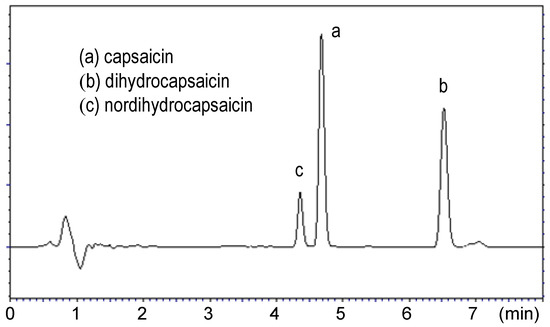
Figure 1. Chromatogram of the standard solution corresponding to 100 µg/g of capsaicin and dihydrocapsaicin (conditions: column Betasil C18 (150 × 4.6 mm × 3 μm), mobile phase: H2O/CH3CN, 50:50 v/v, flow rate: 1.5 mL/min, UV detection at 222 nm).

Figure 2. Chromatogram of the red chili extract (conditions: column Betasil C18 (150 × 4.6 mm × 3 μm), mobile phase: H2O/CH3CN, 50:50 v/v, flow rate: 1.5 mL/min, UV detection at 222 nm).
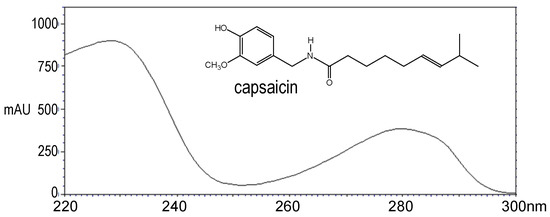
Figure 3. UV spectrum of capsaicin peak eluted at 4.69 mn. The maximum absorbance corresponds to λmax = 228 nm.

Figure 4. UV spectrum of dihydrocapsaicin peak eluted at tR = 6.51 mn. The maximum absorbance corresponds to λmax = 228 nm.
how to extract capsaicin Powder?

Raw Material Pre-processing
Select high-pungency chili varieties (such as Yellow Cherry peppers, Facing Heaven peppers, etc.) that are free from mold, insect infestation, and discoloration. Utilize a bubble washing machine or a high-pressure spray line to remove surface dirt, pesticide residues, and foreign matter from the chilies.
Drying and Pulverizing
Employ a freeze-drying process to lyophilize the washed chilies under low-temperature vacuum conditions until their moisture content reaches ≤ 20%. The freeze-drying temperature is typically maintained between -30°C and -10°C, with a subsequent temperature increase to 30–40°C to complete the drying process. Immediately transfer the dried chilies to a low-temperature storage facility-controlled at below 10°C-and store them in sealed, light-proof containers to prevent the degradation of capsaicin. Pulverize the dried chilies using a low-temperature hammer mill and pass the resulting powder through a 25-mesh standard sieve to obtain a product of uniform fineness. Throughout the pulverizing process, maintain the material temperature at ≤ 40°C to avoid the loss of active ingredients.
Supercritical CO₂ Fluid Extraction
Utilize an industrial-grade supercritical CO₂ extraction system equipped with a CO₂ circulation compressor, a cooling system, and a two-stage separation vessel. Load the 25-mesh chili powder into the extraction vessel, with the batch loading volume set to 60–70% of the vessel's effective capacity. Continuously pass the supercritical CO₂ fluid through the chili powder bed; after dissolving the capsaicin, the fluid flows into the separation vessel.
Separation and Post-processing
The first-stage separation is conducted at a pressure of approximately 8–10 MPa and a temperature of 45–50°C to primarily precipitate the crude capsaicin extract. The second-stage separation is performed at a pressure of 4–6 MPa and a temperature of 35–40°C to recover residual components. The CO₂ is compressed, condensed, and subsequently recycled for reuse. Collect the capsaicin extract from the separation vessel. Transfer the alcohol-containing extract into a vacuum concentration tank; under a pressure of 0.08 MPa and a temperature of 50°C, evaporate and recover the ethanol to yield the crude capsaicin extract.
Drying and Refining
Place the crude capsaicin extract into a vacuum drying oven and dry it at 50°C and 0.08 MPa until the moisture content reaches ≤ 5%, thereby obtaining crude capsaicin powder. For high-purity applications, further purification may be achieved through molecular distillation or column chromatography. Store the final product in sealed, light-proof, and moisture-proof containers.
what are capsaicin extract Powder benefits?

Capsaicin Extract Powder For Weight Loss
In the field of weight management, capsaicin provides a robust scientific foundation for the development of functional foods and weight-loss formulations. By activating TRPV1 receptors, capsaicin upregulates Uncoupling Protein-1 (UCP-1) and promotes the conversion of white adipose tissue into brown adipose tissue, thereby effectively increasing the body's energy expenditure and resting metabolic rate. Regarding the regulation of lipid metabolism, capsaicin extract inhibits the proliferation of preadipocytes as well as lipogenesis within mature adipocytes, thereby reducing visceral fat accumulation.
Furthermore, capsaicin exerts physiological effects that suppress appetite and enhance satiety; by stimulating the secretion of gastrointestinal neuropeptides, it effectively reduces the intake of high-sugar and high-fat foods. At the level of the gut microbiome, capsaicin powder modulates the composition and structure of intestinal flora, significantly increasing the abundance of beneficial bacteria-such as Akkermansia muciniphila-while promoting the production of short-chain fatty acids and inhibiting the proliferation of harmful bacteria. Consequently, it helps to ameliorate insulin resistance and reduce levels of systemic chronic inflammation.
Capsicum Extract Capsaicin Powder For Pain
In the realm of analgesia, capsaicin possesses a dual nature: while it can trigger intense, burning pain in the human body by activating transient receptor potential vanilloid 1 (TRPV1) receptors, it also serves as an analgesic agent suitable for long-term use. Low concentrations of capsaicin induce transient functional inactivation of nociceptor terminals-an effect that typically reverses within a few hours. Conversely, high concentrations of capsaicin extract elicit long-term functional inactivation; the core mechanism underlying this effect involves Ca²⁺/calpain-mediated ablation of axon terminals, which selectively destroys TRPV1-expressing afferent nerve endings, thereby producing a sustained analgesic effect that can persist for several months.
Furthermore, axonal mitochondrial dysfunction and microtubule structural disruption may also play a synergistic role in contributing to this long-term therapeutic efficacy. Based on this mechanism, topical capsaicin powder patches and injectable formulations have been clinically employed to treat neuropathic pain and have also demonstrated potential in the treatment of osteoarthritis. As the ablated afferent nerve terminals gradually regenerate, the analgesic effect slowly diminishes over time-a characteristic that ensures the controllability of the clinical therapeutic intervention.


Capsicum Extract Capsaicin Powder For Skin
In the realm of skin health applications, capsaicin demonstrates potential value in the management of chronic inflammatory skin diseases, such as psoriasis. Based on relevant research, the transdermal administration of capsaicin extract effectively blocks the activation of the IL-23/IL-17 signaling pathway, thereby significantly attenuating the severity of psoriasis-like dermatitis across key metrics, including macroscopic erythema, epidermal hyperplasia, and ear thickness.
At the molecular level, the topical application of capsaicin significantly downregulates the gene expression levels of core psoriasis-associated cytokines-including IL-23, IL-17A, IL-22, TNF-α, and IL-6-consequently alleviating lymphocyte infiltration and abnormal epidermal proliferation. Notably, the protective effects of capsaicin extract powder can be partially attenuated by the direct intradermal injection of IL-23; this observation further substantiates its regulatory mechanism regarding the "neuro-immune axis."
Reference:https://www.mdpi.com/1424-8247/15/7/851
https://www.sciencedirect.com/science/article/pii/S0163725820302746
https://www.sciencedirect.com/science/article/pii/S0753332221007320
what are capsaicin powder uses?
Capsaicin Extract powder Supplement
Capsaicin extract supplements can be utilized for weight management, aiding in weight control by boosting metabolism, suppressing appetite, and accelerating fat burning. Additionally, they help stimulate the secretion of digestive fluids, improve cardiovascular health (including assisting in blood pressure reduction), and reduce respiratory mucus accumulation. Our capsaicin powder is also used to manufacture capsaicin extract pills, capsicum extract pills, and capsicum extract capsules, allowing consumers to easily select the dosage form that best suits their individual needs.

Capsaicin Powder in Agriculture and Industry
Furthermore, in the agricultural and industrial sectors, capsaicin powder serves as a natural repellent to deter mammals from damaging crops and is incorporated into anti-fouling paints to prevent the attachment of marine organisms. It also acts as a core protective ingredient in industrial-grade pepper sprays. We supply high-purity capsaicin powder available in a comprehensive range of specifications, offering flexible compatibility with topical formulations, oral supplements, and specialized industrial mixtures.
capsicum extract Capsaicin Powder side effects,dosage,safety
Capsaicin Powder Safety
- Oral Administration:Short-term, moderate daily doses are generally safe and well-tolerated by most adults. However, ingesting large doses or consuming the product over a prolonged period may lead to gastric discomfort, esophageal reflux, nausea, diarrhea, and-in very rare instances-adverse effects on liver and kidney function.
- Topical Application:A mild burning sensation, erythema (redness), stinging, or itching are expected initial reactions to the product; these symptoms typically subside on their own after a few days of regular use. However, if severe burning pain or a rash develops, discontinue use immediately and apply a cold compress to the affected area. Furthermore, avoid contact with the eyes and mucous membranes, and do not apply to open wounds.
Capsaicin Powder: Pregnant Women and Children
Relevant assessments by the European Food Safety Authority (EFSA) have confirmed the safety of capsaicin extract when used as a feed additive, while also noting its irritant effects on the skin and respiratory tract.
Additionally, contraindications for the use of this product include pregnancy, breastfeeding, use in children, and use in individuals who are physically unwell.
Capsaicin Powder: Drug Interactions
Patients taking anticoagulant medications (e.g., warfarin, heparin) or antiplatelet medications (e.g., clopidogrel, aspirin, ibuprofen) should exercise caution due to an increased risk of bleeding. Concomitant use with Angiotensin-Converting Enzyme Inhibitors (ACEIs) may exacerbate coughing symptoms, while concurrent use with theophylline may interfere with drug metabolism.
where to buy capsaicin powder?
KINTAIBIO® offers you a convenient and reliable procurement channel. You can contact our sales team directly to easily submit online inquiries and place orders for capsaicin powder. We maintain a year-round supply of capsaicin powder available for sale in various specifications, with purity levels ranging from 95%, 98%, and 99% to other grades; we also offer customized production services. Regarding capsaicin powder price, we employ a transparent, batch-specific quotation system that offers preferential rates for bulk orders, backed by comprehensive quality inspection reports and Certificates of Analysis (COAs).

In terms of product advantages, our capsaicin extract powder is characterized by its high purity, low impurity levels, strong thermal stability, and fully preserved biological activity, making it widely applicable in pharmaceutical analgesics, food flavoring, and functional cosmetic additives. KINTAIBIO® implements rigorous quality control measures-from the initial screening of raw chili materials to the final delivery of finished products-conducting multiple tests to verify key parameters such as content, purity, and impurities, thereby ensuring that every batch meets industry standards.Furthermore, our products are packaged in sealed, light-proof containers to effectively prevent any loss of potency during storage and transportation. We invite you to contact us at any time via sales@kintaibio.com to request capsaicin samples or to receive a prompt quotation for bulk orders.

★If you want to get high-quality Capsicum extract powder, please feel free to contact us at sales@kintaibio.com or feedback on the next page.
FAQ
Q: What are the effects of capsaicin on the human body?
A: Capsaicin is a pungent alkaloid derived from chili peppers; its primary mechanism of action is mediated through the activation of the "transient receptor potential vanilloid 1" (TRPV1) channel. TRPV1 is a non-selective cation channel that is highly enriched in primary afferent pain fibers. This activation triggers a cascade of physiological responses. In the context of pain management, capsaicin initially stimulates pain signals but subsequently desensitizes TRPV1-expressing nerve endings, thereby producing a sustained analgesic effect. Beyond pain modulation, TRPV1 activation also influences neuropeptide signaling (e.g., CGRP and Substance P), upregulates genes associated with satiety (such as PYY and BDNF), and downregulates orexigenic signals (such as NPY), thereby regulating feeding behavior and energy balance. Furthermore, capsaicin promotes thermogenesis in adipose tissue and improves mitochondrial function, contributing to metabolic regulation. Moreover, recent evidence suggests that capsaicin possesses mechanisms of action independent of TRPV1; owing to its amphipathic nature-exhibiting both hydrophilic and lipophilic properties-capsaicin can integrate into lipid bilayers, thereby modulating ion channel activity and membrane protein function. Collectively, these diverse mechanisms underpin the therapeutic potential demonstrated by capsaicin across various fields, including metabolism, oncology, and cardiovascular health.
Q: Is capsaicin superior to lidocaine for the treatment of neuropathic pain?
A: Whether capsaicin is "superior" to lidocaine depends on the specific clinical context, the desired duration of therapeutic effect, and the individual patient's specific circumstances. A randomized, placebo-controlled study involving 291 patients suffering from painful diabetic peripheral neuropathy (DPN) directly compared the therapeutic efficacy of 5% lidocaine patches versus 8% capsaicin patches over a 24-week period. The results indicated that the group treated with the 8% capsaicin patch demonstrated a more significant reduction in average pain intensity. 5% lidocaine offers the advantages of rapid onset and immediate pain relief, though it requires daily administration. In contrast, the 8% capsaicin patch must be applied by a healthcare professional once every three months-with each session lasting 30 to 60 minutes-and can provide sustained efficacy for up to 24 weeks; furthermore, it holds the potential to enhance patient adherence and achieve superior long-term cost-effectiveness. Both medications are considered first-line topical therapies for localized neuropathic pain, particularly suitable for patients who have failed to achieve adequate relief-or have experienced adverse side effects-with systemic therapies. Neither agent is inherently superior to the other; the specific choice of medication depends on the patient's preference: whether they prefer to self-apply lidocaine patches daily or to receive a quarterly, professionally administered capsaicin treatment.
Q: Who Should Avoid Using Capsaicin?
A: Capsaicin is contraindicated in various patient populations and clinical scenarios. According to FDA-approved product labeling, capsaicin-containing products must never be applied to wounds, cuts, damaged, irritated, or infected skin under any circumstances. Furthermore, contact between these products and the eyes, mouth, genitals, or any other mucous membranes is strictly prohibited. Individuals with a known allergy to chili peppers, plants of the *Capsicum* genus, or any other ingredients contained in the preparation should strictly avoid using capsaicin products. Women who are pregnant or breastfeeding should discontinue use and consult a physician prior to application. When used as an oral dietary supplement, the safety of capsaicin has not been established for pregnant women, nursing mothers, or children; patients with pre-existing liver or kidney disease should also exercise caution. Patients currently taking anticoagulant or antiplatelet medications-including warfarin, heparin, aspirin, clopidogrel, ibuprofen, and naproxen-should avoid using capsaicin, as its inherent antiplatelet/anticoagulant properties may increase the risk of bruising or bleeding. Additionally, capsaicin should not be used concomitantly with theophylline or angiotensin-converting enzyme (ACE) inhibitors (such as captopril, enalapril, lisinopril, or ramipril), as this combination may exacerbate cough symptoms associated with ACE inhibitor therapy. For patients undergoing surgery, given that capsaicin possesses anti-platelet properties, it is recommended to discontinue use two weeks prior to the procedure. Finally, accidental inhalation of capsaicin may trigger symptoms such as coughing, sneezing, tearing, and respiratory irritation. If you experience a persistent, intense burning sensation, blistering, or a worsening of symptoms, discontinue use immediately and seek medical attention.
Q: Can capsaicin relieve itching?
A: Yes, topical capsaicin demonstrates significant anti-itch (antipruritic) efficacy, although its effectiveness may vary depending on the underlying cause of the itching. Its mechanism of action involves the desensitization and functional inhibition of cutaneous nerve fibers that express TRPV1 receptors; these nerve fibers are responsible for transmitting pain and itch signals. A randomized, vehicle-controlled, double-blind proof-of-concept trial involving 16 healthy volunteers demonstrated that a 24-hour pretreatment with topical 8% capsaicin reduced histamine-induced (histaminergic) itching by approximately 75%, and similarly reduced Mucuna pruriens-induced (non-histaminergic) itching by approximately 75% (peak itch response scores decreased from 4.67 and 5.15 to 1.41 and 0.81, respectively; the differences in both groups were statistically significant, P < 0.01). When the capsaicin pretreatment period was limited to just one hour, it provided only about 60% relief for non-histaminergic itching, suggesting that a longer application duration helps to enhance its antipruritic efficacy. However, another comparative study investigating the efficacy of topical 0.05% capsaicin applied three times daily for five consecutive days found that, while capsaicin effectively inhibited histamine-induced itching in healthy skin, its efficacy in patients with atopic eczema (AE) was relatively weak; this suggests that histamine may not be the primary mediator responsible for triggering itching in atopic eczema. Furthermore, clinical dermatological studies indicate that capsaicin helps significantly alleviate the symptoms of prurigo nodularis and psoriasis, offering a dual therapeutic benefit of both itch relief and analgesia. Currently, 8% capsaicin patches have received approval from the U.S. Food and Drug Administration (FDA) for the treatment of neuropathic pain; however, its application in the field of itch relief represents an emerging therapeutic avenue that still requires further clinical research for validation.
Q: Is capsaicin powder produced through natural extraction or chemical synthesis? What is the difference between the two?
A: We produce both natural and synthetic types of capsaicin powder. Natural capsaicin is extracted from chili peppers and subsequently subjected to crystallization and purification processes, achieving a final purity level of 95%–98%. It contains naturally occurring capsaicinoid compounds, and the proportions of these constituents are fixed-though the specific ratios may fluctuate slightly depending on seasonal variations. Synthetic capsaicin, conversely, is prepared through chemical synthesis processes and boasts a purity level of up to 99%; it exhibits exceptional batch-to-batch consistency and stability, and is free from the variability inherent in natural capsaicinoids that stems from differing source materials. The application fields for the two types differ: for food-grade products and products marketed under a "natural" concept, natural chili extract is typically the preferred choice. Synthetic capsaicin, on the other hand, is frequently utilized in topical pharmaceutical formulations requiring precise dosing, industrial pest repellents, and marine antifouling coatings; in these applications, there are stringent requirements for the consistent uniformity of pungency and purity, and there is no mandate that the ingredients must originate from natural sources. In terms of their efficacy in activating TRPV1 receptors, both forms of capsaicin are equally effective; the specific choice between the two depends primarily on your regulatory compliance requirements and the market positioning of your target product.
Hot Tags: Capsaicin powder, China Capsaicin powder manufacturers, suppliers, factory, Androtec Andrographolide, D-(+)-chiro-Inositol powder, Fructus Gardeniae Extract Powder, Hesperidin methylchalcone powder, Aescinate, Star Anise Shikimic Acid