
Can plant extracts be used in the leather industry? That's a question I've been getting a lot lately, and as a plant extracts supplier, I'm excited to dig into it.
Let's start by understanding what plant extracts are. Simply put, they're substances obtained from plants. We can extract all sorts of chemicals from different parts of plants like leaves, flowers, fruits, and roots. These extracts have a wide range of bio - active compounds, such as polyphenols, flavonoids, and tannins.
Now, let's talk about the leather industry. Traditionally, the leather industry has used a lot of synthetic chemicals for tanning, coloring, and finishing leather products. Synthetic chemicals have their perks. They're often easy to produce in large quantities, and they can give leather consistent properties. But there are some major downsides too. Many synthetic chemicals can be harmful to the environment. They can pollute water sources when they're washed out during the leather - making process. Also, some of these chemicals can be a health risk to the workers in the leather factories.
So, here's where plant extracts come in. There's a growing interest in using plant extracts in the leather industry, and for good reasons.
Tanning with Plant Extracts
Tanning is a crucial step in leather production. It turns raw hides into leather that's durable, flexible, and resistant to decay. Historically, natural tannins from plants were used for tanning. Tannins are a type of polyphenol found in many plants. They react with the collagen in the animal hides, cross - linking the protein fibers and making the leather more stable.
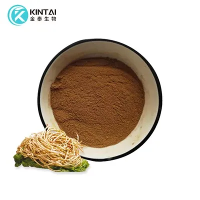
For example, Andrographis Paniculata Leaf Extract contains various bio - active compounds. Some of these compounds might have tanning properties. While it's not as well - known as traditional tanning plants, research could potentially uncover its effectiveness in the tanning process. The advantage of using plant - based tannins is that they're more environmentally friendly compared to synthetic tanning agents. They break down more easily in the environment and are less likely to cause long - term pollution.
Coloring Leather with Plant Extracts
Leather comes in all sorts of colors, and the coloring process is an important part of its aesthetic appeal. Plant extracts can be a great alternative to synthetic dyes. Many plants have natural pigments that can be used to color leather.
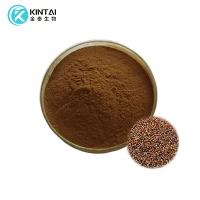
Take Hibiscus Flower Extract Powder for instance. Hibiscus flowers are known for their bright red color. The extract from these flowers could potentially be used to give leather a beautiful red hue. Using plant - based dyes has several benefits. First, they're often non - toxic. This is great for both the workers handling the leather during the coloring process and for the end - users of leather products. Second, plant - based dyes can give leather a more natural and unique look. Each batch of plant extract might have slight variations in color, which can add a touch of individuality to the leather items.
Finishing Leather with Plant Extracts
Finishing is the final step in leather production, where the leather is treated to improve its appearance, feel, and durability. Plant extracts can play a role here too.
Apple Extract Polyphenols have antioxidant and antimicrobial properties. When used in the finishing process, they can help protect the leather from oxidation and microbial growth. Oxidation can cause leather to become brittle and discolored over time, while microbial growth can lead to unpleasant odors and damage to the leather. By using apple extract polyphenols, we can extend the lifespan of leather products and keep them looking and smelling fresh.
Challenges of Using Plant Extracts in the Leather Industry
Of course, it's not all smooth sailing. There are some challenges to using plant extracts in the leather industry.
One big challenge is consistency. Synthetic chemicals are made in a controlled environment, so they have very consistent properties. Plant extracts, on the other hand, can vary depending on the plant's growing conditions, the time of harvest, and the extraction method. This means that it can be difficult to get the same results every time when using plant extracts in leather production.
Another challenge is the scale of production. The leather industry is huge, and it requires large quantities of tanning agents, dyes, and finishing products. Producing enough plant extracts to meet the industry's demands can be a logistical nightmare. We need to ensure that we have enough plants, and that the extraction process is efficient enough to produce large volumes.
Overcoming the Challenges
But don't worry, there are ways to overcome these challenges.
To deal with the consistency issue, we can standardize the extraction process. By carefully controlling factors like the temperature, pressure, and solvent used in the extraction, we can get more consistent plant extracts. We can also analyze the chemical composition of the extracts regularly to make sure they meet the required standards.
As for the scale of production, we can invest in large - scale farming of the plants used for extraction. We can also improve the extraction technology to make it more efficient. By working with farmers and researchers, we can find ways to increase the yield of the plants and extract more of the useful compounds from them.


Conclusion
So, can plant extracts be used in the leather industry? The answer is a resounding yes. They offer a more sustainable and environmentally friendly alternative to synthetic chemicals. While there are challenges to using them, with the right approach, these challenges can be overcome.
If you're in the leather industry and are interested in exploring the use of plant extracts in your production process, I'd love to have a chat with you. We can discuss how our high - quality plant extracts can meet your specific needs. Whether it's for tanning, coloring, or finishing leather, we've got you covered. Drop me a line, and let's start this exciting journey towards a more sustainable leather industry together.
References
- Bate - Smith, E. C. (1977). The phenolic constituents of plants and their taxonomic significance. Phytochemistry, 16(11), 1839 - 1868.
- Roffael, B., & Schneider, B. (1999). Natural dyes for textiles. In Chemicals from Plants (pp. 171 - 186). Springer, Berlin, Heidelberg.
- Sivakumar, M., & Sivakumar, S. (2012). Natural dyes - A review. Journal of Engineering and Applied Sciences, 7(1), 1 - 13.