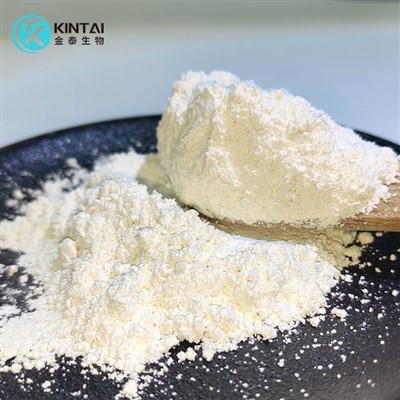



Xi'an Kintai Biotech Inc is one of the most experienced manufacturers and suppliers of sodium ferulate in China. Please feel free to wholesale high quality sodium ferulate for sale here from our factory. For price consultation, contact us.
Products Description
Sodium ferulate, also known as ferulic acid sodium salt or trans-4-hydroxy-3-methoxycinnamate sodium, is a sodium salt derived from ferulic acid. It is a white to pale yellow crystalline powder with a chemical formula C10H9NaO4 and a molecular weight of 230.16 g/mol.
The chemical structure consists of a phenyl group attached to a vinyl side chain, which is further connected to a carboxylic acid group. The sodium salt form is formed by replacing the hydrogen atom of the carboxylic acid group with a sodium atom.

Sources :
Sodium (2E)-3-(4-hydroxy-3-methoxyphenyl)prop-2-enoate can be obtained from both natural sources and through chemical synthesis.
Natural sources: Ferulic acid, the precursor of it, is commonly found in various plants, such as rice bran, wheat bran, oats, and fruits like apples and oranges. It is particularly abundant in the cell walls of plants. Sodium (2E)-3-(4-hydroxy-3-methoxyphenyl)prop-2-enoate can be extracted from these natural sources using various extraction techniques, including solvent extraction, steam distillation, and enzymatic extraction.
Chemical synthesis: it can also be synthesized through chemical reactions. The most common method involves the esterification of ferulic acid with sodium hydroxide or sodium carbonate. This reaction results in the formation of Sodium (2E)-3-(4-hydroxy-3-methoxyphenyl)prop-2-enoate and water.
Physical and Chemical Properties
Physical properties:
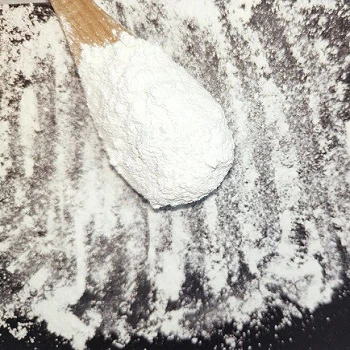
Appearance: Sodium ferulate is a white to pale yellow crystalline powder.
Solubility: It is highly soluble in water and forms a clear or slightly yellow solution.
Melting point: The melting point of this product is typically around 205-210°C.
Odor: It is odorless.
Chemical properties:

Stability: Sodium (2E)-3-(4-hydroxy-3-methoxyphenyl)prop-2-enoate is relatively stable under normal conditions, but it can degrade under certain factors such as high temperature, strong acids, or strong bases. It is recommended to store in a cool, dry place away from light and moisture.
pH: The aqueous solution is slightly acidic, with a pH range of approximately 4-6.
Reactivity: it can undergo various chemical reactions, including esterification, hydrolysis, and oxidation. It can also form complexes with metal ions.
These physical and chemical properties play a crucial role in its applications as a material intermediate in various industries, including pharmaceuticals, cosmetics, and food. Understanding these properties is essential for quality control, formulation development, and optimizing its performance in different applications.
Synthesis Methods of Sodium Ferulate
Extraction from Natural Sources
Sodium (2E)-3-(4-hydroxy-3-methoxyphenyl)prop-2-enoate can be extracted from natural sources that contain ferulic acid, such as rice bran, wheat bran, oats, and fruits. The extraction process involves several steps:
a) Preparation of the source material: The plant material is collected and dried to remove moisture. It is then ground into a fine powder to increase the surface area for efficient extraction.
b) Solvent extraction: The powdered plant material is mixed with a suitable solvent, such as ethanol, methanol, or water, to extract ferulic acid. The solvent is chosen based on its ability to dissolve ferulic acid while minimizing the extraction of unwanted compounds.
c) Filtration and purification: The extracted solution is filtered to remove solid impurities. Further purification processes, such as solvent evaporation, chromatography, or crystallization, may be employed to obtain a concentrated ferulic acid solution.
d) Conversion to sodium ferulate: The extracted ferulic acid can be converted by neutralizing it with sodium hydroxide or sodium carbonate.
Chemical Synthesis
Chemical synthesis is another method of producing it. The typical synthesis involves the esterification of ferulic acid with sodium hydroxide or sodium carbonate. The reaction takes place under controlled conditions of temperature and pressure. The steps involved in the chemical synthesis are as follows:
a) Esterification: Ferulic acid is reacted with sodium hydroxide or sodium carbonate in the presence of a suitable solvent and a catalyst, such as sulfuric acid or p-toluenesulfonic acid.
b) Filtration and purification: The reaction mixture is filtered to separate any solid impurities. The filtrate is then subjected to purification processes, such as solvent evaporation, crystallization, or chromatography, to obtain pure powder.
Enzymatic Synthesis
Enzymatic synthesis offers a greener and more sustainable approach compared to chemical synthesis. It involves the use of enzymes, such as lipases or esterases, to catalyze the reaction between ferulic acid and sodium hydroxide. The enzymatic synthesis process consists of the following steps:
a) Enzyme selection and immobilization: Suitable enzymes with esterification activity are selected and immobilized on a solid support matrix to enhance their stability and reusability.
b) Reaction setup: Ferulic acid, sodium hydroxide, and the immobilized enzyme are mixed in a reaction vessel. The reaction is carried out under controlled temperature and pH conditions.
c) Conversion: The enzyme catalyzes the esterification reaction, converting ferulic acid into water.
d) Separation and purification: The reaction mixture is separated to remove the immobilized enzyme. Further purification steps, such as filtration, evaporation, or chromatography, may be employed to obtain high-purity sodium ferulate.
Comparison of Synthesis Methods

Each synthesis method has its advantages and limitations:
Extraction from natural sources: This method utilizes renewable plant materials and is considered more sustainable. However, the yield and purity of Sodium (2E)-3-(4-hydroxy-3-methoxyphenyl)prop-2-enoate may vary depending on the source, extraction technique, and seasonal variations.
Chemical synthesis: Chemical synthesis offers a controlled and reliable production process. It allows for large-scale production and ensures consistent quality. However, it may involve the use of hazardous chemicals and generate waste.
Enzymatic synthesis: Enzymatic synthesis is environmentally friendly and offers high selectivity. It can be performed under milder reaction conditions and reduces the use of toxic reagents. However, the process may have limitations in terms of enzyme stability, reaction kinetics, and cost.
Applications of Sodium Ferulate
Pharmaceutical Industry
Sodium ferulate has gained significant attention in the pharmaceutical industry due to its various potential health benefits. It has been studied for its anti-inflammatory, antioxidant, cardiovascular protective, and anticancer properties.

Anti-inflammatory and Antioxidant Effects
Sodium (2E)-3-(4-hydroxy-3-methoxyphenyl)prop-2-enoate exhibits anti-inflammatory effects by inhibiting the production of inflammatory mediators and reducing oxidative stress. It has been investigated for its potential therapeutic applications in conditions such as rheumatoid arthritis, inflammatory bowel disease, and dermatological disorders.
Cardiovascular Health Benefits
Studies have shown that it can help protect against cardiovascular diseases. It possesses antioxidant properties that scavenge free radicals and reduce oxidative damage to blood vessels. Additionally, it may have antiplatelet and antithrombotic effects, contributing to improved cardiovascularhealth. Sodium (2E)-3-(4-hydroxy-3-methoxyphenyl)prop-2-enoate has been investigated for its potential use in the prevention and treatment of conditions such as hypertension, atherosclerosis, and myocardial infarction.
Anti-cancer Potential
it has demonstrated promising anticancer activity in preclinical studies. It has been shown to inhibit the growth of cancer cells, induce apoptosis (programmed cell death), and suppress tumor progression. Research suggests that may have potential applications in cancer prevention and adjuvant therapy.
Cosmetics and Personal Care
Sodium (2E)-3-(4-hydroxy-3-methoxyphenyl)prop-2-enoateis utilized in the cosmetics and personal care industry for its antioxidant and skin-protective properties. It helps neutralize free radicals, reduces oxidative stress, and protects the skin from damage caused by environmental factors. it is utilized in various skincare products, including creams, lotions, serums, and sunscreens, to promote skin health and delay the signs of aging.
Food and Beverage Industry
it finds applications in the food and beverage industry as a natural antioxidant and food preservative. It helps inhibit lipid oxidation, extending the shelf life of food products and enhancing their stability. Sodium (2E)-3-(4-hydroxy-3-methoxyphenyl)prop-2-enoate is used in edible oils, meat products, beverages, and bakery goods to prevent rancidity and maintain product quality.

Other Potential Applications
Anti-diabetic effects: Sodium (2E)-3-(4-hydroxy-3-methoxyphenyl)prop-2-enoate has been investigated for its potential role in managing diabetes by improving insulin sensitivity and glucose metabolism.
Neuroprotective effects: Studies suggest that may possess neuroprotective properties, offering potential applications in the prevention and treatment of neurodegenerative diseases.
Wound healing: it has exhibited wound-healing properties by promoting collagen synthesis, enhancing cell migration, and reducing inflammation.
Agricultural applications: it has been explored for its potential as a plant growth regulator and as a natural alternative to synthetic agrochemicals for crop protection.
Industrial applications: it can be used as a raw material for the synthesis of other compounds, such as ferulic acid esters, which find applications in industries such as plastics, coatings, and polymers.
our advantages


Packing And Shipping

If you want to Purchase high-quality Sodium ferulate please feel free to contact us at Sales@Kintaibio.Com or feedback on the next page. Whatsapp:+86 133 4743 6038 Site web: www.kintai-bio.com | http://en.kintaibio.com
Hot Tags: sodium ferulate, China sodium ferulate manufacturers, suppliers, factory, Betulin Powder, Watermelon Seed Protein, Sophoridine Powder, senna extract powder, Beta ecdysterone powder, Senna Dry Extract