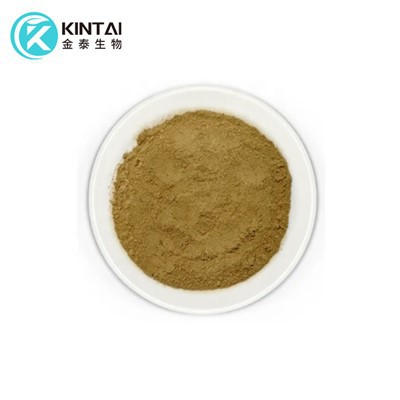



Xi'an Kintai Biotech Inc is one of the most experienced manufacturers and suppliers of coptis chinensis root extract powder in China. Please feel free to wholesale high quality coptis chinensis root extract powder for sale here from our factory. For price consultation, contact us.
coptis chinensis root extract powder Factory
As a manufacturer specializing in high-purity botanical extracts, KINTAIBIO® is dedicated to serving as your trusted supplier of Coptis Root Extract. Our product is derived from the dried rhizomes of Coptis chinensis (a plant belonging to the Ranunculaceae family); its primary active constituent is Berberine Hydrochloride. Our standard specifications range from 90% to 97% Berberine Hydrochloride content, with the 99% purity grade specifically designed to meet the rigorous demands for high-quality raw materials in the pharmaceutical and functional product sectors. The product presents as yellow needle-like crystals; although the hydrochloride salt exhibits only slight solubility in cold water, our advanced manufacturing processes ensure that the resulting extract possesses excellent uniformity and stability.


Building upon the extensive history of Coptis Root Extract in Traditional Chinese Medicine, modern research has validated its significant clinical value in areas such as blood glucose reduction, lipid regulation, anti-inflammation, anti-cancer effects, and the improvement of neurological function. Through a multifaceted mechanism-including the modulation of insulin sensitivity, reduction of insulin resistance, and the exertion of anti-inflammatory and antioxidant effects-this extract offers reliable strategic support for the intervention and management of conditions such as diabetes, cardiovascular and cerebrovascular diseases, osteoporosis, and neurodegenerative disorders like Alzheimer's disease.
1. berberine hydrochloride
|
Product Grade |
Source / Process |
Testing Method & Standard |
Purity Specification |
Key Procurement Points |
|
Pharmaceutical Grade |
Botanical Extraction (Fibraurea recisa Pierre) |
Titration Method (CP 2005) |
≥97% |
Complies with Chinese pharmacopoeia standards. Suitable for official pharmaceuticals and high-end health products. |
|
HPLC |
91% - 92% |
Verified by chromatography, indicating the more precise intrinsic purity for this specific source. |
||
|
Botanical Extraction (Phellodendron) |
Titration Method (CP 2015) |
≥98% |
Meets the enhanced standards of the newer pharmacopoeia. Preferred for high-standard preparations. |
|
|
HPLC |
95% - 97% |
Quantified by chromatography, with well-defined quality attributes. Suitable for formulations with strict process requirements. |
||
|
Veterinary Grade |
Botanical Extraction (Fibraurea recisa Pierre) |
Titration Method |
≥90% |
Cost-effective raw material, meeting basic compliance needs for veterinary preparations. |
|
HPLC |
~30% |
Note: This is an extract/concentrate. Procurement contracts must specify the product name as "Berberine Extract" (30% content). |
||
| Typical USE |
Chemical Synthesis |
HPLC |
≥99% |
Advantages: Excellent purity and cost-effectiveness, high batch-to-batch consistency, free from botanical impurity risks (e.g., pesticides, heavy metals). The preferred choice for large-scale veterinary drug production. |
2. Berberine Sulfate
|
Source / Process |
Testing Method & Standard |
Purity Specification |
Key Procurement Points |
|
Botanical Extraction (Phellodendron) |
Titrimetric Method |
≥98% |
Meets conventional quality standards. |
|
HPLC |
≥95% |
Confirmed by chromatography. Typically offers better water solubility than the hydrochloride salt, potentially improving bioavailability in certain dosage forms. |
Contact us now to get the free samples!
KINTAIBIO® has dedicated over a decade to the research and development of active botanical ingredients, securing numerous national invention patents and international certifications-including ISO 9001, ISO 22000, IP Non-GMO, Halal, and Organic certifications. Our competitive advantages lie in our exceptional product quality, a stable supply capacity exceeding 100 tons per month, and highly competitive pricing. Furthermore, all our products strictly adhere to EU and US quality standards and have been certified by independent third-party testing agencies. In addition to offering standard-specification Coptis extracts, we are pleased to provide customized services tailored to your specific needs. We invite you to contact us at sale@kintaibio.com to request free samples or to discuss your procurement requirements.
how to extract berberine from coptis chinensis?

Raw Material Pulverization and Acidic Extraction
High-quality Coptis chinensis rhizomes are selected as the raw material. After washing and drying, the rhizomes are pulverized into a coarse powder with a particle size of 20–40 mesh. The Coptis powder is charged into an extraction vessel, and a 0.5%–1% dilute sulfuric acid solution is added for cold maceration. The solid-to-liquid ratio is controlled within the range of 1:6 to 1:10. The extraction process is performed continuously for three cycles, with each cycle lasting 4–6 hours. The acidic conditions facilitate the conversion of berberine-the active constituent in Coptis-into soluble salts, thereby enhancing the extraction yield of the active ingredient. Upon completion of the extraction, the mixture is subjected to filtration and separation to yield the extract solution and the spent residue.
Precipitation and Extraction of Crude Berberine
Hydrochloric acid is added to the extract solution to adjust the pH to 1–2. Subsequently, 5%–10% sodium chloride (NaCl) is added to induce salting-out. The mixture is then allowed to stand for approximately one hour, during which the berberine gradually precipitates to form a crude solid. Following filtration, the crude berberine precipitate and the acidic mother liquor are separated. This step primarily utilizes the principles of acidification and salting-out to enhance the enrichment efficiency of berberine, thereby laying the foundation for subsequent purification.
Alkalinization, Purification, and Impurity Removal
The crude berberine precipitate is dissolved in purified water under heating. Subsequently, lime milk is added to adjust the pH to 8.5–9.0. Under these alkaline conditions, impurities-particularly sulfate ions-react to form insoluble precipitates, such as calcium sulfate, thereby effectively removing inorganic salts, pigments, and various other impurities. After filtration, the calcium sulfate and impurity precipitates are removed, yielding a partially purified berberine filtrate.
Recrystallization and Refinement Process
Hydrochloric acid is once again added to the purified filtrate to adjust the pH to 1–2, followed by the addition of 10%–15% sodium chloride to induce a secondary salting-out. A cooling and standing crystallization process is then employed to allow the berberine hydrochloride to gradually crystallize into stable solid forms. Upon completion of crystallization, the crystals are separated from the mother liquor via centrifugation or vacuum filtration to enhance both the purity of the final product and the integrity of the crystals.
Drying, Pulverization, and Product Packaging
The resulting berberine hydrochloride powder crystals are washed with cold purified water to remove residual surface salts and impurities. Finally, the crystals are subjected to vacuum drying at 80°C to ensure that the product's moisture content meets the required standards. The dried crystals are pulverized and granulated into an 80–100 mesh powder, then sent to the Quality Testing Center for analysis of parameters such as active ingredient content, moisture, heavy metals, and microbial levels. Upon passing inspection, the material is packaged according to standard specifications to produce the final Coptis extract powder product.
coptis chinensis benefits

coptis chinensis root extract skin benefits
Based on its well-defined anti-inflammatory mechanisms, Coptis extract (whose primary active constituent is berberine hydrochloride) has also demonstrated significant value in the field of skin health. Studies indicate that berberine can inhibit the secretion of pro-inflammatory cytokines (such as IL-6) and downregulate the expression of COX-2 and iNOS by modulating multiple signaling pathways, including NF-κB, MAPKs, and JAK-STAT.
In the treatment of acne, it inhibits the proliferation of Propionibacterium acnes, reduces sebum secretion, and alleviates inflammation associated with skin lesions. Furthermore, in models simulating atopic dermatitis and psoriasis, it helps restore the skin's lipid barrier, inhibits the hyperproliferation of keratinocytes, and significantly ameliorates inflammatory responses. These studies provide a scientific basis for the application of Coptis extract in the management of inflammatory skin diseases such as acne, atopic dermatitis, and psoriasis.
coptis chinensis diabetes
Research indicates that active constituents found in Coptis extract-such as berberine and coptisine-hold unique value in the intervention of diabetic complications. Studies have confirmed that Coptis inflorescence extract can significantly improve pulmonary function and alleviate pathological damage to lung tissue in diabetic mice, while simultaneously elevating HDL-C levels and reducing levels of TG, TC, and LDL-C.
Mechanistic investigations have revealed that its primary active constituents-berberine and linarin-effectively inhibit high-glucose-induced alveolar epithelial-to-mesenchymal transition (EMT) by modulating the AMPK/NEU1 signaling pathway, thereby ameliorating diabetic lung injury. This discovery provides a new scientific basis for mitigating diabetic complications through the dual strategies of lowering blood glucose and regulating lipid metabolic disorders.

Reference:https://www.sciencedirect.com/science/article/abs/pii/S0378874113004972
https://www.sciencedirect.com/science/article/abs/pii/S0944711323003240
coptis chinensis uses
Medicinal Uses of Coptis chinensis
Berberine hydrochloride has been widely incorporated into medications for treating conditions such as diarrhea and diabetes; furthermore, its applications are gradually expanding into the fields of cardiovascular and cerebrovascular diseases, cancer therapy, and immune modulation.
Coptis chinensis Supplements
Leveraging its natural properties for lowering blood sugar and lipids, as well as its immune-modulating effects, Coptis chinensis extract has emerged as a core ingredient in numerous dietary supplements aimed at supporting metabolic health, thereby providing a reliable foundation for the development of innovative functional foods.

Feed Additives and Veterinary Medicines
Moreover, thanks to its exceptional antimicrobial properties, berberine hydrochloride is widely utilized as an alternative to conventional antibiotics within the sectors of animal feed additives and veterinary medicines, thereby contributing significantly to effective animal health management.
where to buy Coptis Chinensis Root Extract Powder?
If you are seeking high-quality Berberine Hydrochloride raw materials, Kintai is your trusted partner. As a manufacturer of Berberine with extensive experience in R&D and production, we specialize in providing natural plant extracts-primarily in the form of Coptis chinensis root extract powder. Our core product line focuses on the Coptis chinensis Berberine series, featuring a Berberine Hydrochloride powder product derived from Coptis chinensis with a purity level reaching 99%, accompanied by third-party reports verifying impurity profiles and content analysis.

KINTAIBIO® holds multiple certifications-including GMP, ISO22000, HACCP, and HALAL-and is equipped with a nationally certified, standardized laboratory and advanced production lines. We offer customization services for various botanical ingredients, such as Coptis extract powder, Coptis chinensis extract, and standardized Chinese garlic extract. Various specifications-such as Coptis chinensis root extract powder at a 10:1 ratio-can be produced on demand; additionally, we provide product support related to Wolfberry extracts. Whether you require Coptis ingredients for procurement or wish to discuss bulk orders of Coptis chinensis root extract, please feel free to contact us at sales@kintaibio.com. We are dedicated to providing high-quality, consistent Coptis chinensis root extract powder to clients worldwide.

★If you want to get high-quality Berberine hydrochloride Powder, please feel free to contact us at sales@kintaibio.com or feedback on the next page.
Hot Tags: coptis chinensis root extract powder, China coptis chinensis root extract powder manufacturers, suppliers, factory, bulk melatonin powder, Galla Chinensis Extract, Icariin Powder, Kaempferol Powder, senna extract powder, Yohimbine Powder