


Xi'an Kintai Biotech Inc is one of the most experienced manufacturers and suppliers of roselle extract powder in China. Please feel free to wholesale high quality roselle extract powder for sale here from our factory. For price consultation, contact us.
Products Description

what is Roselle Extract Powder?
Roselle Extract Powder has been used for traditional medicinal and culinary purposes across different cultures for centuries. It is known as "Karkade" in Egypt, where it is consumed as a refreshing tea or juice and has a significant cultural and religious importance. In West Africa, Roselle is used for treating various ailments such as fever, hypertension, and liver disorders. In Ayurvedic medicine, it is used for its cooling and detoxifying properties. Roselle's cultural and historical significance is also reflected in its use as a dye for textiles and clothing, with evidence dating back to ancient Egypt.
Roselle flower extract is an important natural plant pigment due to its vibrant red color, primarily attributed to its high content of anthocyanins. Natural pigments have gained increasing attention in recent years due to their safety, sustainability, and consumer demand for clean-label products. Roselle extract offers several advantages over synthetic colorants, including improved stability, health-promoting properties, and environmental sustainability. As a result, Roselle extract is rapidly emerging as a promising alternative to synthetic colorants in the food, beverage, and cosmetic industries.
Roselle (Hibiscus sabdariffa) is a plant species native to West Africa, which is widely cultivated in tropical and subtropical regions worldwide. Its flowers are rich in anthocyanins, flavonoids, and other bioactive compounds, which make it a valuable source of natural pigments and functional ingredients. Roselle flower extract is obtained from the dried calyces of the Roselle plant, using various extraction techniques such as solvent extraction, supercritical fluid extraction, or aqueous extraction. The resulting extract can be used as a natural colorant, flavor enhancer, and functional ingredient in various food, beverage, and cosmetic applications.
Botanical and Chemical Composition of Roselle Flower

A. Botanical characteristics of the Roselle plant (Hibiscus sabdariffa) The Roselle plant, scientifically known as Hibiscus sabdariffa, belongs to the Malvaceae family. It is an annual herbaceous plant that grows well in warm climates. The plant can reach a height of 2-3 meters and has distinctive lobed leaves. The flowers are large, showy, and typically bright red in color, although certain cultivars may have variations in color, ranging from pale yellow to deep purple. After pollination, the flowers develop into fleshy calyces, which are the part used for extracting the pigment.
B. Primary pigments: Anthocyanins in Roselle Extract Powder Anthocyanins are the primary pigments responsible for the vibrant red color of Roselle flower extract. These water-soluble pigments belong to the flavonoid group and are widely distributed in plants. The major anthocyanins identified in Roselle flowers include cyanidin-3-sambubioside, delphinidin-3-sambubioside, and cyanidin-3-glucoside. The specific composition and concentration of anthocyanins may vary depending on factors such as plant variety, maturity stage, and extraction method.
Anthocyanins exhibit pH-dependent color changes, ranging from red in acidic conditions to blue or purple in alkaline environments. This property makes them versatile colorants for a wide range of food and beverage applications. Additionally, anthocyanins possess antioxidant properties, which contribute to their health-promoting potential.
C. Secondary pigments: Flavonoids and other compounds In addition to anthocyanins, Roselle flowers contain various secondary pigments, including flavonoids and other phenolic compounds. Flavonoids, such as quercetin and kaempferol glycosides, contribute to the antioxidant activity and sensory attributes of Roselle flower extract. These compounds not only enhance the color stability but also offer potential health benefits.
Roselle flowers also contain polysaccharides, organic acids (e.g., citric acid), vitamins, minerals, and volatile compounds that contribute to its overall chemical composition. These compounds may play a role in the flavor, aroma, and potential functional properties of Roselle flower extract.
Color Properties and Stability
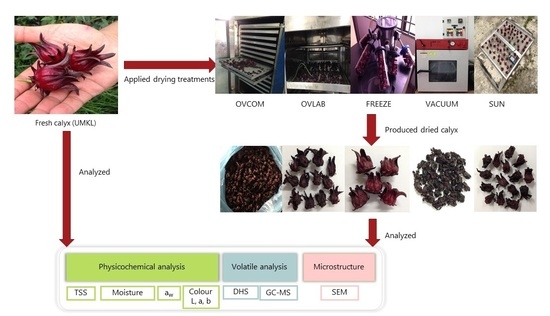
A. Spectrophotometric analysis of Roselle Extract Powder color properties can be analyzed using spectrophotometry, which measures the absorption of light by the pigment at different wavelengths. The color of Roselle extract is typically characterized by its hue angle, chroma, and lightness/darkness values. The hue angle represents the dominant color and ranges from red to purple, while chroma measures the intensity or saturation of the color. Lightness/darkness values indicate the brightness of the color.
B. pH-dependent color variations and implications As mentioned earlier, anthocyanins are pH-dependent pigments, and their color changes with changes in pH levels. In acidic conditions, Roselle flower extract appears bright red, whereas in alkaline environments, it shifts towards purple or blue hues. This property makes it a versatile natural colorant for various food products, such as beverages, confectionery, and dairy products.
However, pH fluctuations during processing, storage, and consumption can affect the color stability of Roselle extract. Thus, it is essential to optimize the pH level and buffering systems in the product formulation to achieve desired color stability.
C. Factors affecting color stability over time and under different conditions Several factors can impact the color stability of Roselle flower extract, including temperature, light exposure, oxygen exposure, and processing methods. High temperatures and prolonged exposure to light can accelerate the degradation of anthocyanins, resulting in color loss and reduced shelf life. Oxygen exposure can also cause oxidative degradation of anthocyanins, leading to color changes.
Processing methods, such as heat treatment, can affect the stability of Roselle extract's color. For example, thermal processing can cause anthocyanin degradation, resulting in color changes. It is crucial to balance the processing conditions to minimize color loss while achieving other functional and sensory attributes.
Applications in Food Industry

A. Use as a natural colorant in various food products Roselle Extract Powder vibrant red color and health-promoting properties make it a popular natural colorant in the food industry. It can be used in various products, including beverages, confectionery, dairy products, and baked goods. Roselle extract's pH-dependent color variations also make it suitable for creating visually appealing multi-colored products.
B. Enhancement of sensory attributes and consumer acceptance In addition to its coloring properties, Roselle flower extract can also enhance the sensory attributes of food products, such as a fruity flavor and aroma. These added sensory attributes can improve the overall product quality and consumer acceptance.
C. Regulatory aspects and market trends in natural colorants The increasing demand for clean label and natural products has driven the market for natural colorants, including Roselle flower extract. This trend is expected to continue due to consumers' growing awareness of health and environmental issues associated with synthetic colorants. However, regulatory requirements for natural colorants may vary across different regions and countries. It is crucial to ensure compliance with local regulations and standards when using Roselle extract as a natural colorant.
our advantages


Packing And Shipping

If you want to Purchase high-quality Roselle Extract Powder, please feel free to contact us at Sales@Kintaibio.Com or feedback on the next page. Whatsapp:+86 133 4743 6038 Site web: www.kintai-bio.com | http://en.kintaibio.com
Hot Tags: roselle extract powder, China roselle extract powder manufacturers, suppliers, factory, Taxifolin Powder