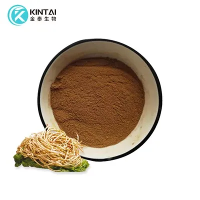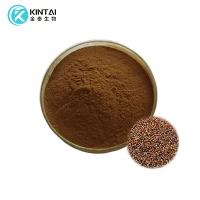

What is the absorption rate of Pueraria Isoflavones?
As a supplier of Pueraria Isoflavones, I've been frequently asked about the absorption rate of this remarkable natural compound. Pueraria Isoflavones are a group of bioactive substances extracted from Pueraria lobata, a plant long - recognized in traditional medicine for its numerous health benefits. Understanding the absorption rate is crucial for both consumers and professionals in the health and wellness industry, as it directly impacts the effectiveness of products containing these isoflavones.
Factors Affecting the Absorption of Pueraria Isoflavones
- Chemical Structure and Formulation
The chemical structure of Pueraria Isoflavones plays a significant role in their absorption. Isoflavones exist in different forms, such as aglycones and glycosides. Aglycones are generally absorbed more rapidly than glycosides because they do not require prior hydrolysis in the gut. For example, daidzein, an aglycone form of isoflavone found in Pueraria, can be absorbed directly through the intestinal wall, while its glycoside form, daidzin, needs to be broken down by gut microbiota first.
The formulation of Pueraria Isoflavones also matters. When combined with other substances, the absorption can be either enhanced or hindered. For instance, certain lipids can improve the solubility and subsequent absorption of isoflavones. On the other hand, high - fiber foods may reduce the absorption rate by binding to the isoflavones and preventing their uptake in the intestines.
- Individual Physiological Factors
Age, gender, and gut health are important individual factors influencing the absorption of Pueraria Isoflavones. In general, younger individuals tend to have a more efficient digestive system, which may lead to better absorption. Women may also have different absorption patterns compared to men, as hormonal differences can affect the metabolism and uptake of isoflavones.
Gut microbiota composition is another critical factor. A healthy gut with a diverse range of beneficial bacteria can efficiently break down the glycoside forms of isoflavones into their absorbable aglycone forms. In contrast, individuals with an imbalanced gut microbiota, such as those with digestive disorders or on long - term antibiotics, may experience reduced absorption of Pueraria Isoflavones.
- Dosage and Administration
The dosage of Pueraria Isoflavones can impact absorption. Higher doses do not necessarily mean better absorption. In fact, when the dosage exceeds the capacity of the absorption mechanisms in the intestines, the excess isoflavones may pass through the digestive tract without being fully absorbed.
The mode of administration also affects absorption. Oral administration is the most common way to consume Pueraria Isoflavones. However, the isoflavones need to pass through the acidic environment of the stomach and the complex digestive processes in the intestines before being absorbed. Sublingual administration, where the isoflavones are placed under the tongue, can bypass some of the digestive barriers and potentially lead to faster and more efficient absorption, although this method is less commonly used.
Measuring the Absorption Rate
Measuring the absorption rate of Pueraria Isoflavones is a complex process. Scientists typically use techniques such as blood plasma analysis to detect the presence and concentration of isoflavones after ingestion. By measuring the time it takes for the isoflavones to appear in the blood and the peak concentration reached, they can estimate the absorption rate.
Another approach is to analyze the excretion of isoflavones in urine. Since the absorbed isoflavones are eventually metabolized and excreted through the kidneys, measuring the amount of isoflavones in urine can provide insights into the overall absorption and metabolism process. However, these methods have limitations, as they do not fully account for the distribution and utilization of isoflavones in different tissues.
Typical Absorption Rates Reported in Research
Research on the absorption rate of Pueraria Isoflavones shows a wide range of results. Some studies suggest that the absorption rate of daidzein, one of the major isoflavones in Pueraria, can range from 20% to 50% in healthy individuals. The absorption of other isoflavones like genistein may be slightly lower.
It's important to note that these rates are approximate and can vary depending on the factors mentioned above. For example, a study on post - menopausal women found that their absorption rate of Pueraria Isoflavones was generally lower compared to pre - menopausal women, likely due to hormonal changes and age - related decline in digestive function.
The Significance of Absorption Rate for Consumers and Our Business
For consumers, understanding the absorption rate of Pueraria Isoflavones is essential for making informed decisions about supplementation. If the absorption rate is low, consumers may need to adjust the dosage or choose a different formulation to achieve the desired health benefits. For example, if they have a less - than - optimal gut microbiota, they may consider taking a probiotic along with Pueraria Isoflavones to improve absorption.
As a supplier of Pueraria Isoflavones, we are committed to providing high - quality products with optimal absorption potential. We invest in research and development to improve the formulation of our products, ensuring that the isoflavones are in a form that is easily absorbed by the body. We also offer educational resources to our customers, helping them understand how to maximize the benefits of our Pueraria Isoflavones.
In addition to Pueraria Isoflavones, we also supply other high - quality pharmaceutical ingredients such as Ethyl Protocatechuate, Schizandrin Powder, and Nicotinamide Riboside Chloride Powder. These products have their own unique absorption characteristics and health benefits, and we are dedicated to providing the best possible solutions for our customers.
If you are interested in learning more about Pueraria Isoflavones or any of our other products, or if you have questions about absorption rates and product formulations, we encourage you to contact us for a detailed discussion. Our team of experts is ready to assist you in making the right choices for your business or personal health needs.

References
- Setchell KD, Zimmer-Nechemias L, Cai J, Heubi JE. Exposure of infants to phyto-oestrogens from soy-based infant formula. Lancet. 1997;350(9090):23-27.
- King JC, Shumak SK, Turnlund JR. Bioavailability of isoflavones from soy milk and soy tablets determined by using stable isotopes. Am J Clin Nutr. 2001;74(5):584-590.
- Rowland I, Wiseman H, Holdsworth M, et al. Metabolism of soy isoflavones by the gut microflora: a study in germ-free and human flora associated rats. Free Radic Res. 2000;33(3):397-407.